Map the way
to a better
future
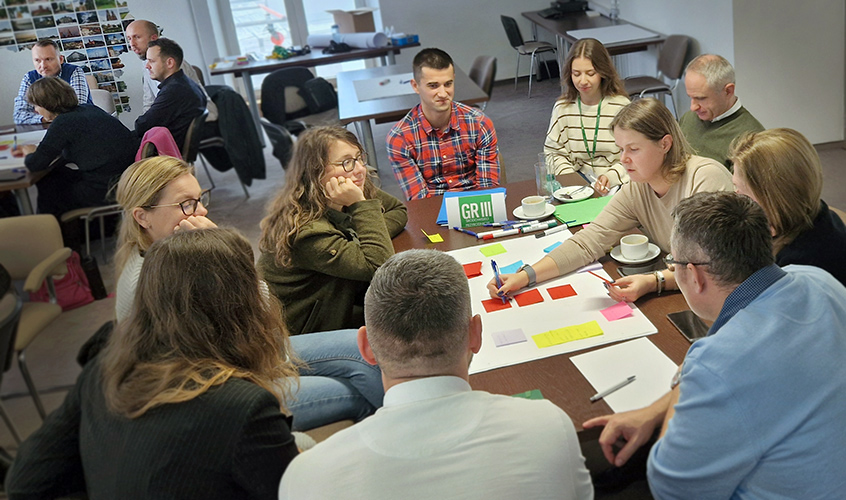
Image: Mazowieckie Biuro Planowania Regionalnego w Warszawie.
Bold visions are great, but getting there is hard.
The ASM Pathways™ method (“Pathways”) is a comprehensive, participatory future-planning framework designed by the Centre for Systems Solutions to help diverse groups of stakeholders navigate the complexity of contemporary societal challenges. It has been developed to bridge the gap between science, policy, and society by transforming an understanding of complex sustainability challenges into practical strategies, and deployed as part of the Planning Land Use Strategies: Meeting biodiversity, climate and social objectives in a changing world (PLUS Change) project.
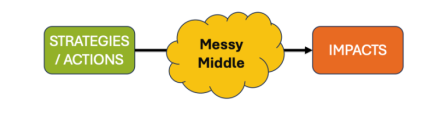
The Pathways Method helps with turning ambition into action. By working backwards from a desired future, it reveals the barriers that block progress and helps your group design the interventions needed to move forward — step by step.
Is the Pathways method for you?

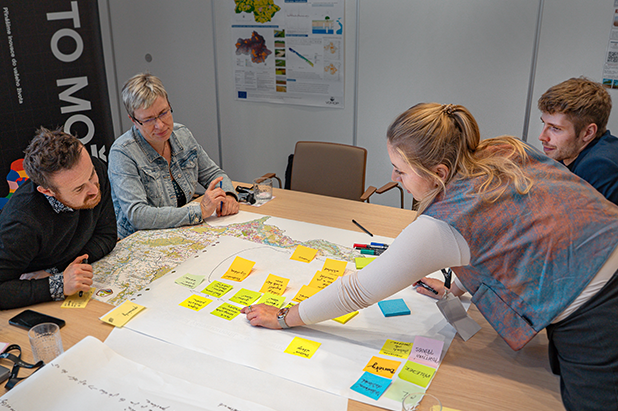
Workshop organised in November 2025 by JINAG, South Moravia, Czech Republic.
The Pathways method was successfully implemented in stakeholder workshops across nine European countries between September 2025 and February 2026. The method guided diverse stakeholder groups’ discussions, clarified ambitions and led to concrete routes toward desired futures.
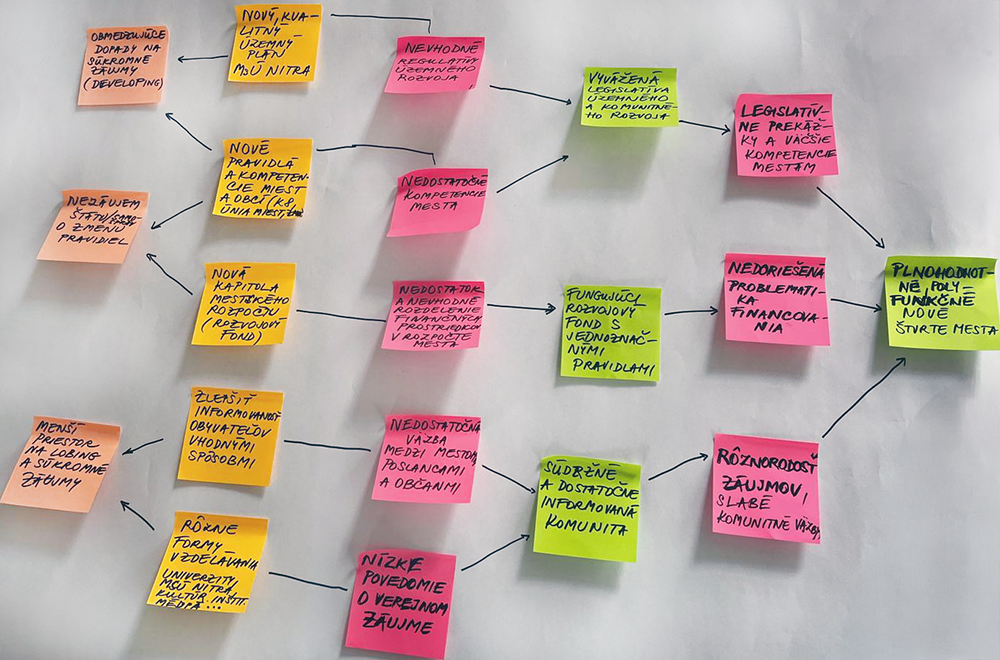
Created at a workshop organised in November 2025
by Constantine the Philosopher University in Nitra, Slovakia.
Each workshop focused on a locally relevant land-use challenge, putting the flexibility of the method to the test. For instance, in the South Moravian region of Czechia, participants developed Pathways to use land improvements as a strategic opportunity to retain water in the landscape. In Nitra, Slovakia, stakeholders co-created Pathways toward a new city district centred on urban nature, biodiversity, and high-quality public spaces.
Participants opinion
Experts from various fields (regional officials, university professors, researchers, municipal representatives, farmers, etc.) gathered in one place, listened to one another, and worked together to find a solution to the problem.
The Pathways method proved to be a practical framework for structuring dialogue among diverse stakeholders, helping to align different perspectives toward shared urban development goals.
We found it to be a very effective way of moving from abstract, long-term visions to more concrete and constructive discussions about how to achieve them. It worked particularly well for bringing different stakeholders together to work collaboratively on complex topics in a practical and solution-oriented way.
Pathways of Change workshops created a unique space for co-developing solutions focusing on the challenges of sustainable land use. The workshop process, focused on identifying and bridging the gaps between the desired vision and the current state, proved inspiring for participants.

The approach gave stakeholders a structure to think beyond constraints and explore what would be needed to reach the desired future. It was especially valuable in bringing together different perspectives around the complex issues that involve water management, biodiversity and agriculture at the same time.
What is the Pathways Method
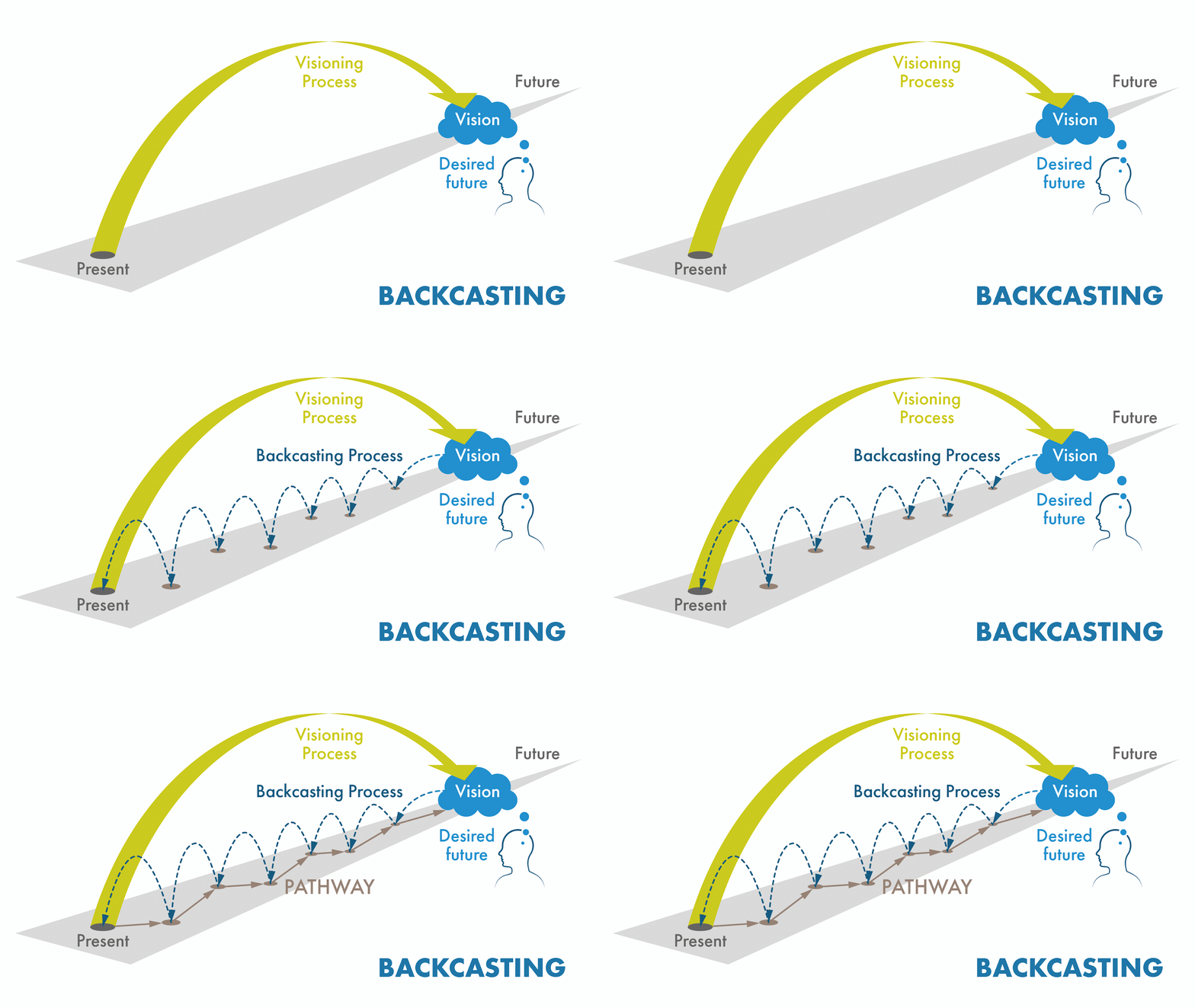
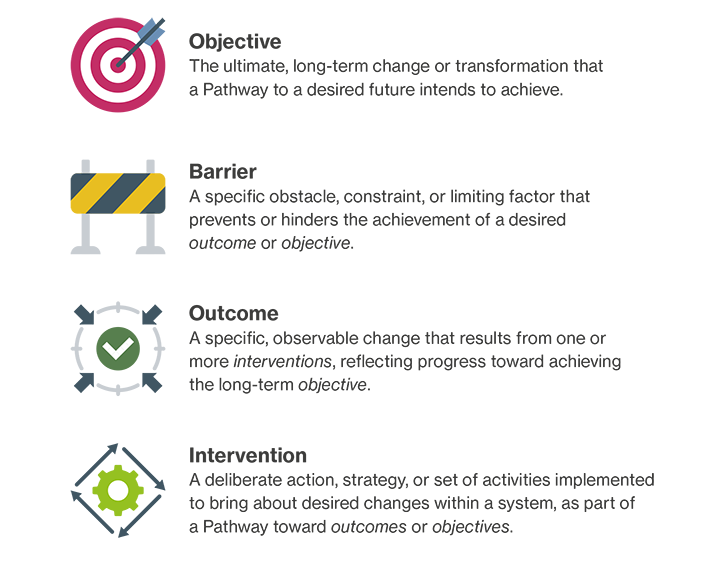

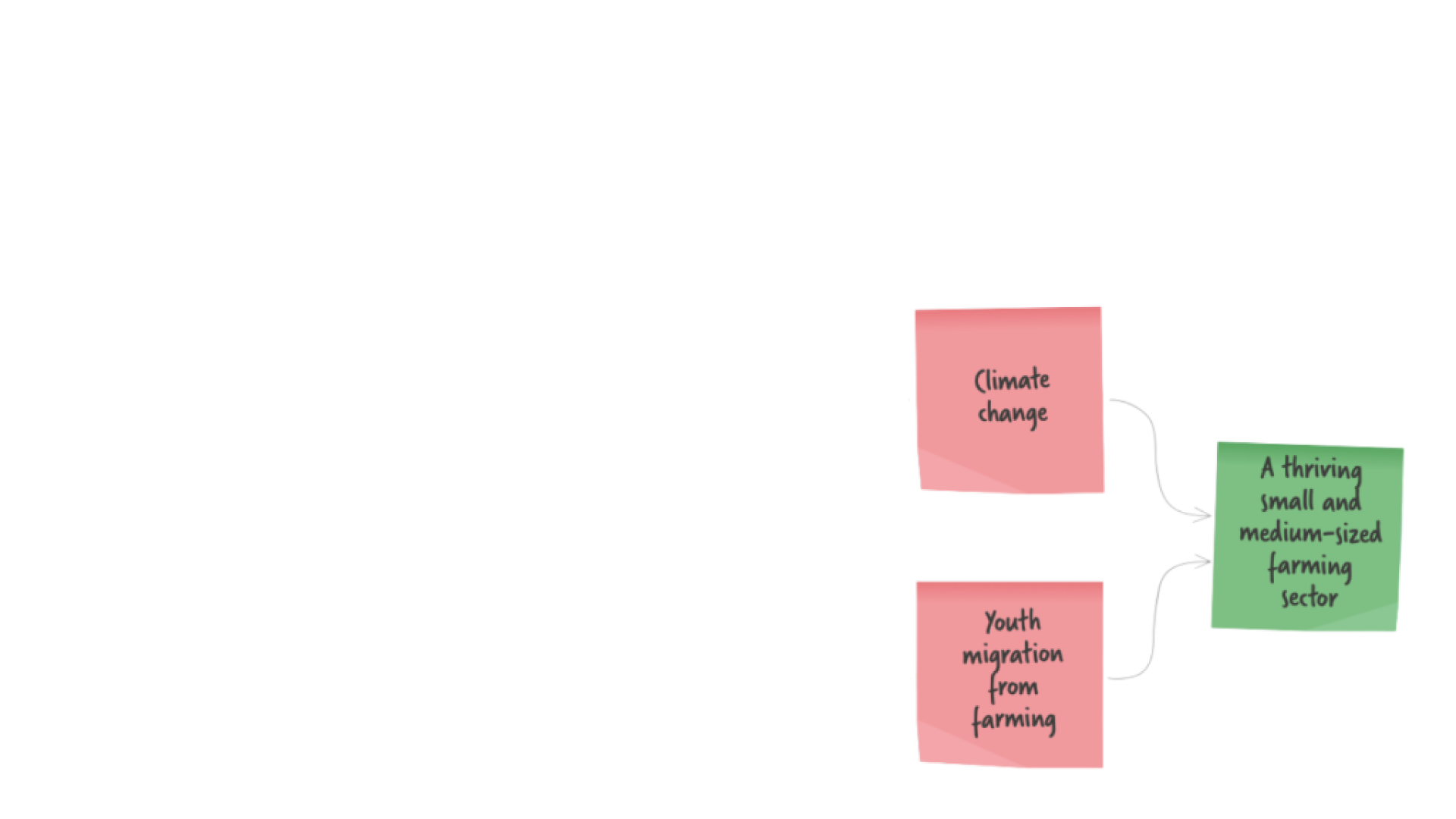
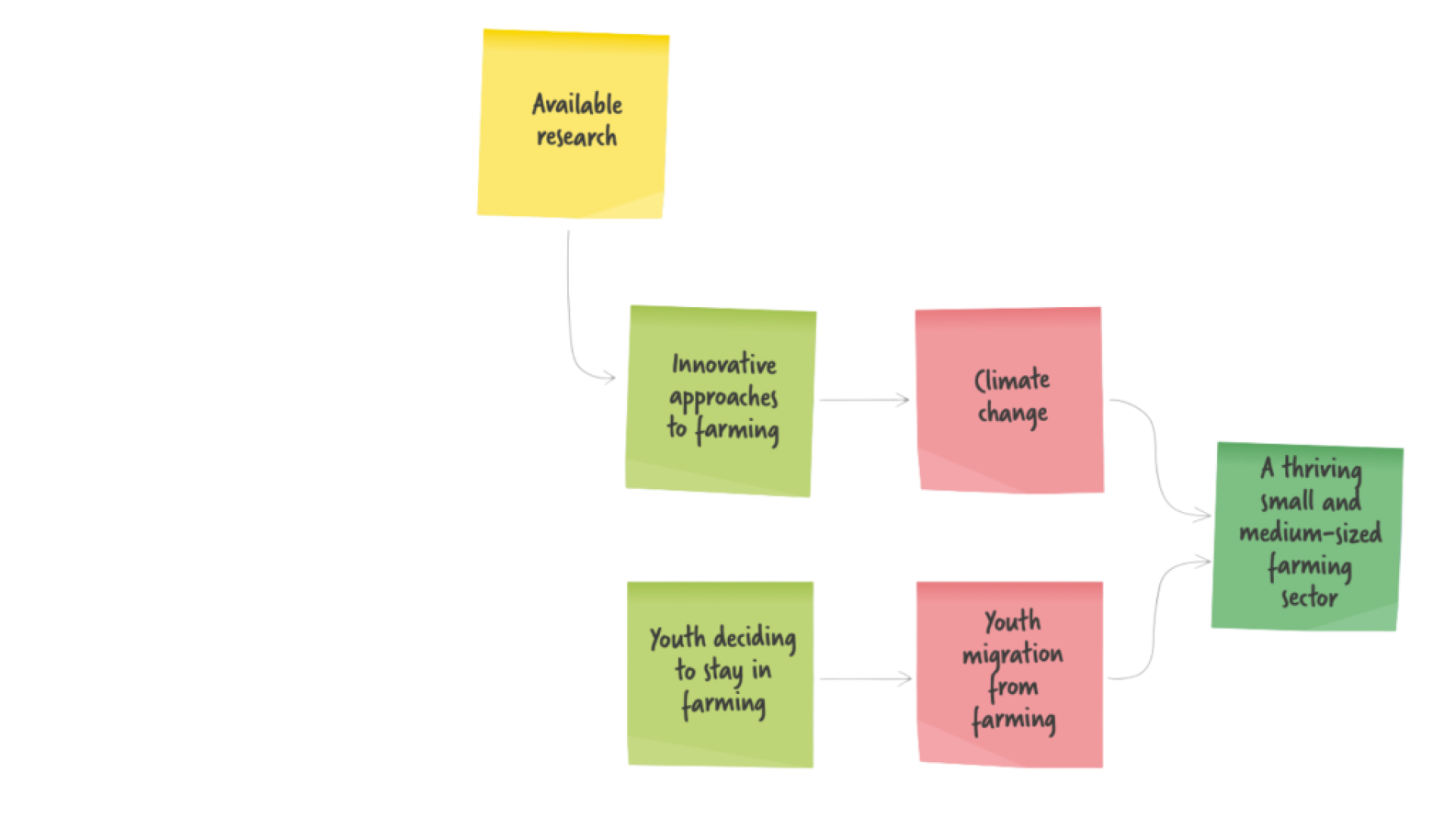
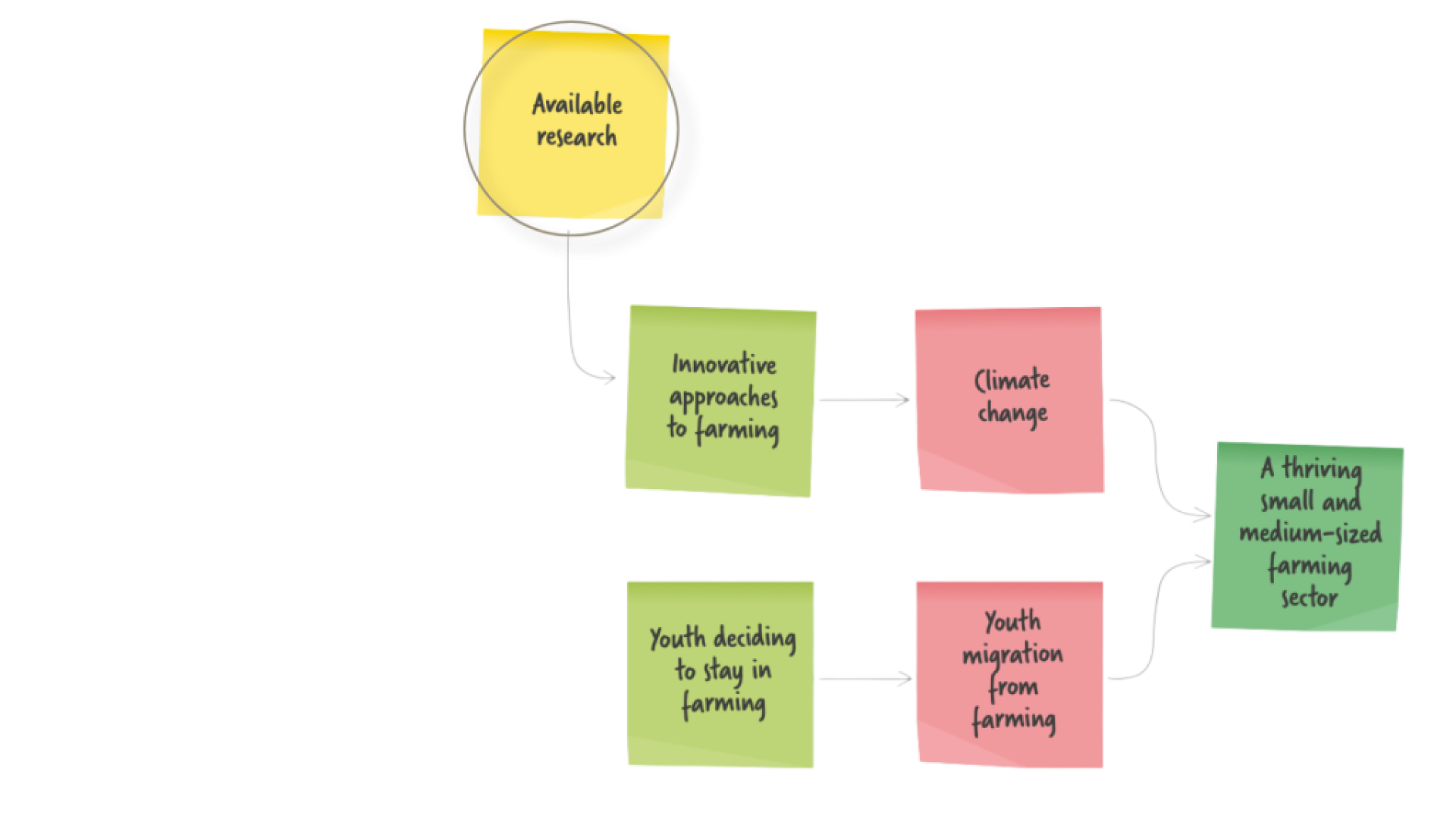
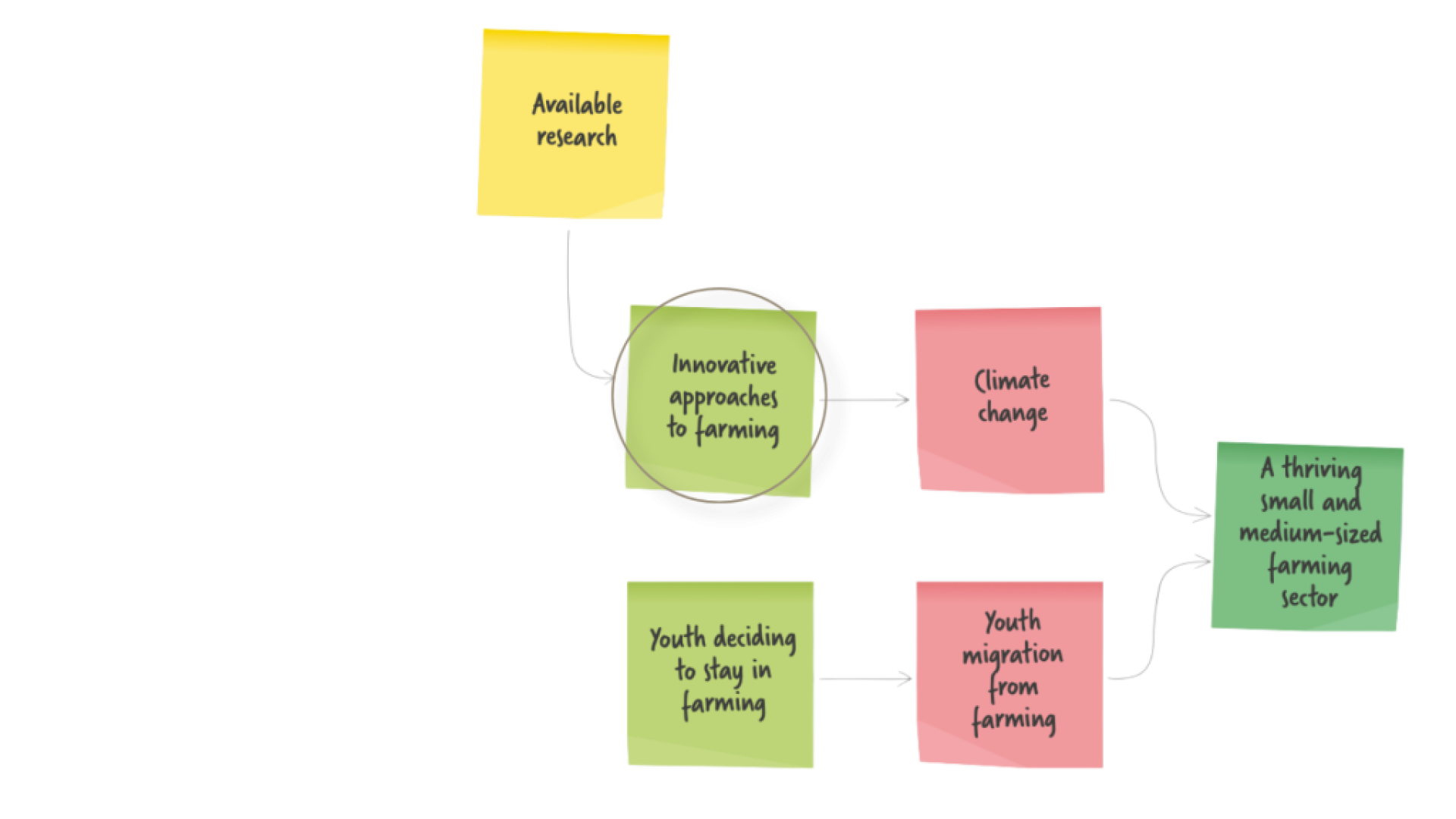
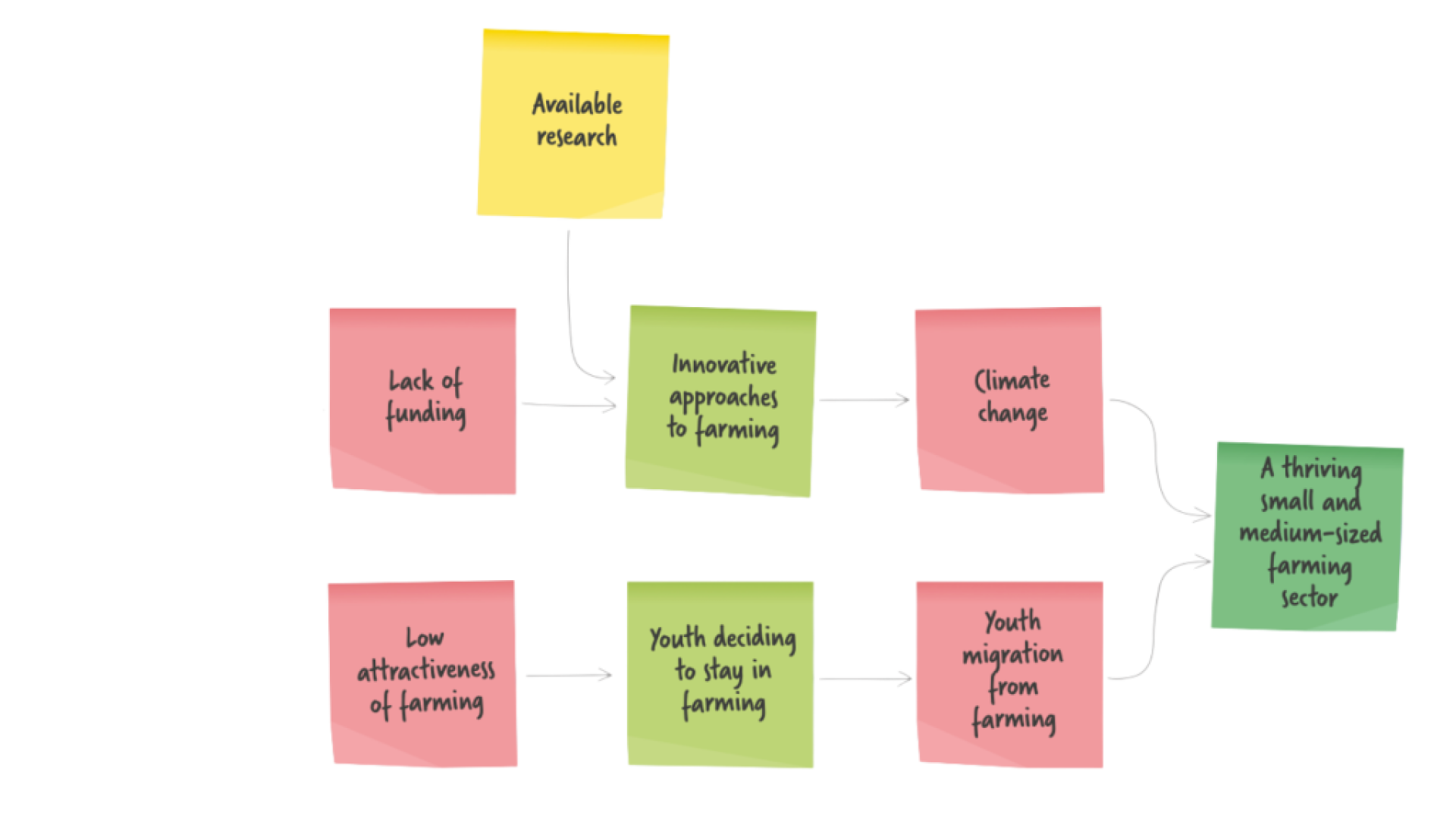
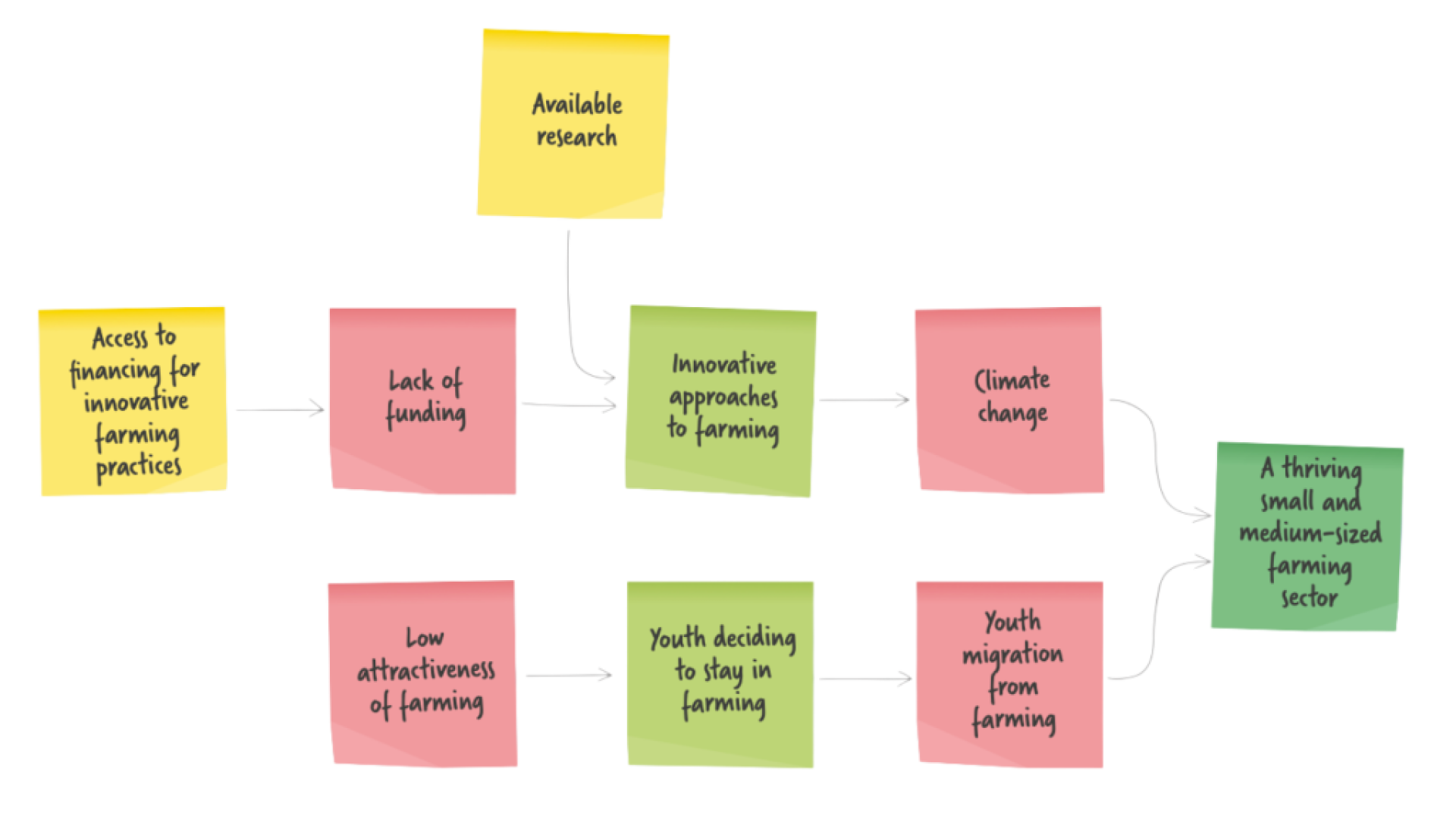
Guidebook
Download the Pathway method guidebook
Ready to bring the Pathways method to your organisation? This comprehensive guide provides everything you need to design and execute a successful workshop. From identifying the right stakeholders to the sticky note strategy, it provides the step-by-step instructions required to develop your own Pathways.
Inside the Guidebook:
- A Step-by-Step Workshop Agenda: A detailed breakdown of the process.
- Pathway elements toolkit: Clear definitions for barriers, interventions, outcomes, and more.
- Facilitation tips: Tips for running a workshop and managing diverse groups.
- Practical examples: Good practices from the method’s use in PLUS Change
PDF, 66 pages, 19 MB
Designers
ASM Pathways™ adaptation to PLUS Change:
Piotr Magnuszewski
Michal Plšek
Paolo Campo
Graphics:
Bartosz Naprawa
Video editing:
Anna Koch
Support:
Vincent O’Connell
Michalina Kułakowska
Contact
Have a project or an idea in mind? Contact us to discuss the possibilities of collaboration. Or simply drop a line for suggestions and opinions. We normally reply within 24 hours.
PLUS Change is an EU-funded Horizon project that aims to create strategies and decision-making processes for land use, addressing issues related to climate change, biodiversity, and human well-being. The project’s goal is to generate knowledge and drive transformative change towards a sustainable world. This is done through intensive collaboration with 12 case study areas, while producing a range of tools to shape how land use decisions are made by citizens, planners and policy makers.
Funded by the European Union. Views and opinions expressed are however those of the author(s) only and do not necessarily reflect those of the European Union or the European Climate, Infrastructure and Environment Executive Agency (CINEA). Neither the European Union nor the granting authority can be held responsible for them.
The PLUS Change project has received funding from the European Union’s Horizon Europe research and innovation programme under Grant Agreement No 101081464.
This work has been funded by the UK Research and Innovation (UKRI) under the UK government’s Horizon Europe funding guarantee [grant number 10067940]
